

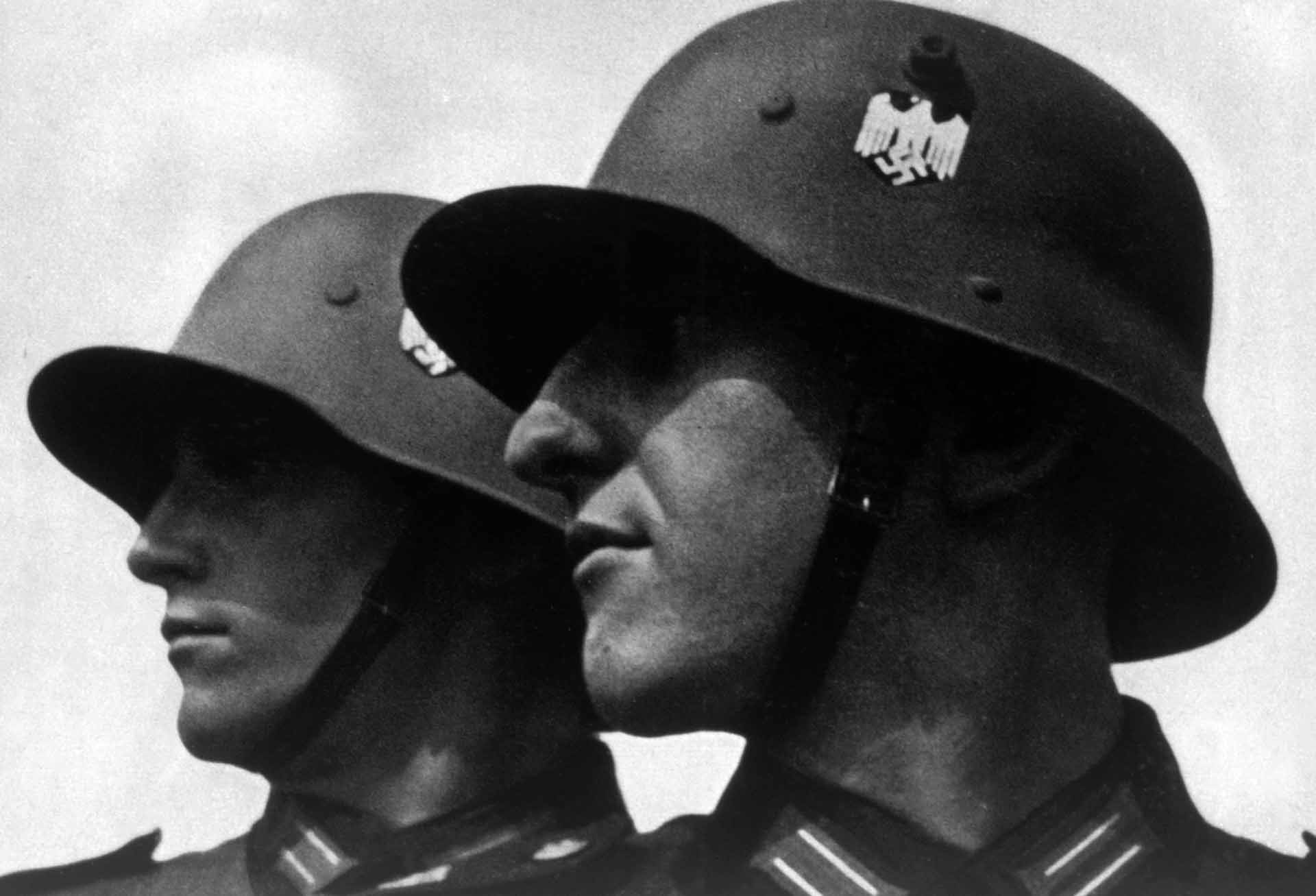
July 20, 1944 is the day of the boldest attempt to overcome the Nazi dictatorship in Germany. On that day, a bomb was detonated under the heavy table where Hitler himself was holding a briefing with high-ranking officers. The bomb had been placed there by Colonel Claus von Stauffenberg and was the beginning of a thoroughly planned attempt to take over power throughout Germany. Stauffenberg was not alone. There were more than 1.000 participants – civilians, military personnel, politicians, trade unionists – at various levels of society. One of them was General Erich Hoepner. He had a background that set him apart from Stauffenberg and many of the other resistance fighters. Marion Gräfin Dönhoff has described some of them in the book For the sake of honor (1994). Among them were names like Moltke and Bismarck. Hoepner had a simpler background. His father was a medical officer. Stauffenberg was originally a cavalryman. Hoepner was aware early on that armored forces had changed the battlefield. He also became a very skilled and successful armored general, both in Poland in 1939 and in France in 1940.
During the First World War, Erich Hoepner had served on the Western Front, and after the Treaty of Versailles in 1919 he continued in the greatly reduced German army known as the Reichswehr. According to the 1919 peace treaty, it was to consist of 100.000 men, but in reality the available personnel may have included 300.000. The task was difficult, to defend Germany's borders. But soon after Hitler came to power, it became clear to Erich Hoepner and the leadership of the Wehrmacht that Hitler's goal was something else – a war of aggression. This is the background to the plans to overthrow Hitler in 1938, as Fabian von Schlabrendorff tells in his book Officier gegen Hitler (1984). The plan was not carried out due to British Prime Minister Neville Chamberlain's concessions to Hitler's threat of war in 1938. With the gangster's instinct, Hitler understood how to weaken his opponent as much as possible through threats and then defeat him by force. Hoepner was already an opponent of Hitler's dictatorship in 1938. Like many, he understood that an offensive war against Poland and France would lead to war with Britain and eventually also with the USA, and thus defeat was a given even before the war began.
However, Erich Hoepner became a successful regimental and division commander in both Poland and France. He intervened decisively against violations of international law, which led to conflict with the Waffen SS. When the attack on the Soviet Union began in August 1941, the image of Hoepner changed. His orders and other appearances reflected the Nazi perception of reality. The war against the Soviet Union appeared as a decisive part in an inevitable struggle between the races, where the destruction of one race by the other was the goal. What had happened to Hoepner? Nothing, really. During the early 1900th century, Darwin's theory of evolution, interpreted by Herbert Spencer, appeared to be the scientific truth for large circles. This view came to play the "role of the obvious". (Anders Nygren) Darwinism thought in races - see Darwin's works Descent of Man. Not everyone was aware that racial thinking nullifies the rule of law – that a human being is a human being. Existence was perceived as an inevitable and continuous antagonism, "survival of the fittest". Not everyone drew the same conclusions, but Hoepner saw Operation Barbarossa in this light. That is why he also implemented Hitler's infamous commissar order in his units. At every level, the Red Army had party representatives – commissars – with decision-making power, alongside military commanders. According to the commissar order, these were to be immediately executed if they were captured by German units. This was undoubtedly a war crime.
Hoepner's unit, 4 Panzer Groups, was the spearhead of the attack on Moscow. In Advent 1941, the forces were on the verge of collapse and the severe cold made the advance increasingly slow. Hoepner anticipated Russian counterattacks and ordered a retreat on January 8. On the same day, he was personally dismissed by Hitler and expelled from the army.
Hoepner had made the right decision and had been punished for it. Many in the Wehrmacht realized this, and when he returned to Berlin he was able to reconnect with the resistance circles in which he had been active in 1938.. The trust he had there was evident, among other things, in his being appointed to take command of the reserve army after the fall of the state, which included the forces in and around Berlin.
In 1940, Hoepner had vigorously asserted international law, also against the Waffen SS. In Operation Barbarossa, he gave orders for war crimes that were characterized by the Darwin-Spencerian racial concept. In front of Moscow in December 1941, he experienced that the Russian nation was by no means the inferior race that Hitler had portrayed. On the contrary, it was the German leadership – under the dictator’s command – that was dilettante and inferior. These experiences may provide the key to Hoepner’s readiness to risk his life to save Germany from Nazism.
When it became clear that the July 20 attack had failed, Erich Hoepner was arrested. In custody he was severely tortured but did not reveal any names. In the “trial” led by the notorious judge Roland Freisler, Hoepner was humiliated in many ways. He was sentenced to death and executed by hanging. His family was imprisoned.
Nothing can diminish Erich Hoepner's courage and willingness to sacrifice as a resistance fighter. But his dependence on contemporary self-evident facts – especially Darwin's and Spencer's racial thinking – contributed to his also becoming a war criminal when he implemented the commissar's order in his units. Hoepner's dilemma shows that it is not enough to be a skilled professional as an officer and soldier. It is not enough to know the rule book. What else is needed? Fabian von Schlabrendorff gave his contribution to the festschrift to Eugen Gerstenmaier a telling title in 1976: Subspecies eternity – from the perspective of eternity. That is how we are freed from the obviousness of our time.